
How Modern MEPT Systems Can Respect Historic Architecture
—
National Historic Preservation Month underscores the responsibility we have as engineers: to modernize historic buildings for long term performance without compromising the architectural character that defines them. Effective historical building preservation relies on our ability to integrate modern performance without erasing the architectural detail embedded in historic structures. At KBSO, we approach MEPT design in these buildings with a simple premise – systems should support the architecture, not hinder it.
Engineering Solutions Within Historic Constraints
Historic structures come with inherent constraints: irregular framing, limited chase space, shallow floor-to-floor heights, restrictions on façade penetrations, and limited ability to alter existing ceilings. Instead of forcing conventional systems into these conditions, we let the existing architecture establish the engineering framework. This often leads us toward high performance, low profile solutions – such as Dedicated Outdoor Air Systems (DOAS) that reduce duct sizes, integrate within original truss systems, and preserves the volume that gives many historic buildings their character.
Our process begins long before construction drawings. We study how the building originally moved air, brought in natural light, and carried loads. From there, we model how different mechanical strategies can enhance performance without disrupting those patterns. Early analysis allows us to evaluate how mechanical strategies affect envelope behavior, long term resilience, and opportunities for discretion before any irreversible decisions are made. This early analysis is especially critical given that many historic buildings lack envelope waterproofing and/or insulation. As a result, particular care is required to ensure that the introduction of forced-air systems does not compromise the existing envelope.
Adaptive Reuse Case Studies: The Assembly and Cole Motor
This approach has guided KBSO’s work across a range of historic building types. For The Assembly – the transformation of Ford Motor Company’s early 20th century Indianapolis factory into a mixed use development and TWG headquarters – preserving volume and scale was critical. A Variable Refrigerant Flow (VRF) system facilitated reduced ductwork sizes and minimized visual impact, allowing dramatic ceiling heights, exposed structure, and a central lightwell to become the defining interior architectural features. Lighting, plumbing, and technology systems were carefully integrated to support modern workplace and residential needs while reinforcing the clarity and openness of the historic structure.
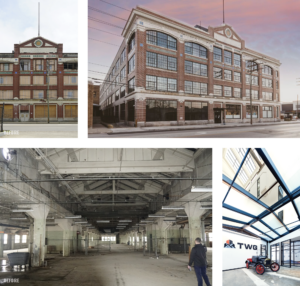
A similar philosophy is shaping the ongoing redevelopment of the Cole Motor Car Company complex, where a long vacant historic factory is being adapted into a mixed income residential community. Mechanical strategies balance modern comfort with the building’s industrial identity, incorporating operable windows to support natural ventilation and energy recovery units serving residential corridors – an uncommon but deliberate approach that improves air quality and efficiency without compromising historic fabric. Electrical and plumbing systems are coordinated to support residential, retail, and educational uses while maintaining flexibility and long term sustainability. Across all scales, the goal remains the same: systems that quietly reinforce the architecture rather than redefine it.
Electrical, lighting, plumbing, and technology systems follow the same philosophy. Modern LED lighting strategies and coordinated distribution paths are developed to reinforce the architecture’s visual hierarchy – not compete with it. The absence of visual noise is intentional; it reflects a commitment to letting historic materials and proportions remain the focus, a foundational goal in historical preservation architecture.
Preserving Architecture While Improving Performance
Successful adaptive reuse demonstrates that comfort, sustainability, and authenticity can coexist when engineering is calibrated to the building rather than imposed upon it. By designing with intention and coordinating early, we make sure these systems operate quietly in the background, while the architecture continues to speak for itself – advancing KBSO’s broader mission of historical building preservation in every project we touch.

About
Seun Odukomaiya, PE, LEED AP
Managing Partner
Seun brings extensive expertise in designing mechanical systems for large, complex projects, with a specialized focus on integrating modern HVAC and building automation systems into existing and historically significant buildings. He is proficient in scenario-planning for building systems and has completed numerous LEED projects, providing valuable insight into enhancing building efficiency while respecting architectural and historical integrity. A strong advocate for sustainable engineering, Seun is passionate about modernizing our existing building stock through thoughtful retrofits, adaptive reuse, and historical renovations that balance occupant comfort, energy performance, and preservation goals.